Grade LevelHigh School |
TopicsBiology |
AuthorsÉamon Callison, Patrice Rodgers |
Lesson Summary
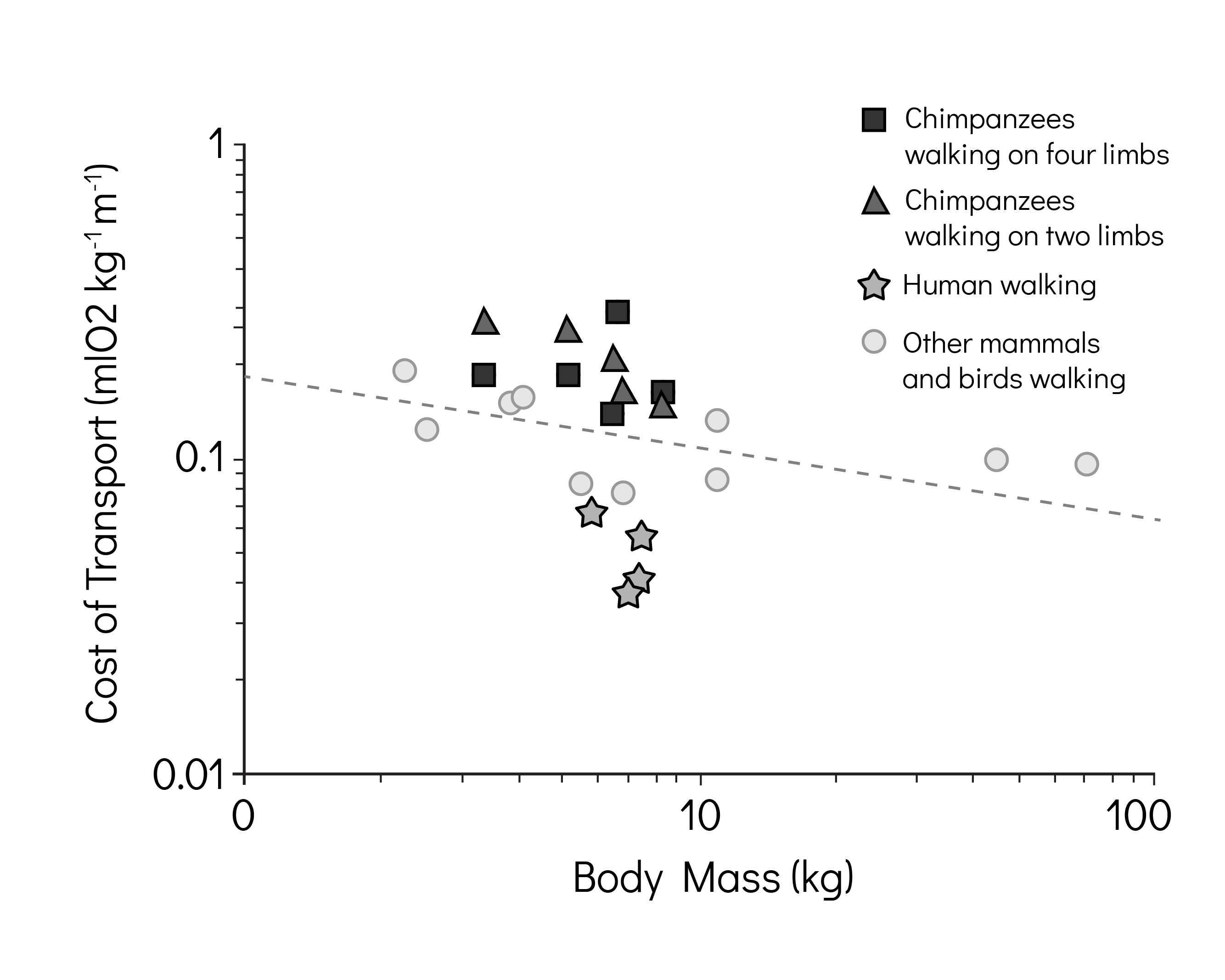
 Evolutionarily, chimps (and bonobos) are the closest living relatives to modern humans, with 99.6% of their DNA being the same as ours. How can we be so close genetically and yet so far away from being the same? This lesson helps to explain how one of our biggest differences— locomotion—might be the key to why our evolutionary paths diverged.
Upon completion of this lesson, students will be able to:
- model and contrast the locomotor gaits of humans and chimpanzees.
- explain how the process of evolution could have led to humans having an energetically efficient gait.
- explain how the process of evolution could have led to the preservation of the less efficient chimpanzee gait.
Standards
Science and Engineering Practices:
SP4, SP6, SP7MA Science and Technology/Engineering (2016):
HS-LS3-4(MA), HS-LS4-2, HS-LS4-5NGSS (2013):
HS-LS4-1, HS-LS4-2, HS-LS4-5Common Core Math/Language Arts Standards:
CCSS.ELA-LITERACY.RST.9-10.7Tags
bipedal, bipedalism, cost of transport (COT), energetics, evolution, hominins, last common ancestor (LCA), natural selection, quadrupedal, quadrupedalismEducator SoundBites
Feedback coming soon!
Lesson Documents
Bite
Student
Educator
Additional Documents
Feedback
Let us know what you think of this lesson!